
One turtle’s final journey rewrites what we know about where they travel
A female hawksbill turtle tagged by researchers from the Save Our Seas Foundation D’Arros Research Centre (SOSF-DRC) in St Joseph Atoll washed ashore on a beach near Kipini in Kenya. The recovery of this turtle, which was recognised by her flipper tags and probably killed by fishing trawlers out at sea before she washed ashore, has extended the known foraging range of adult hawksbills from Seychelles all the way eastward to the coast of Kenya.
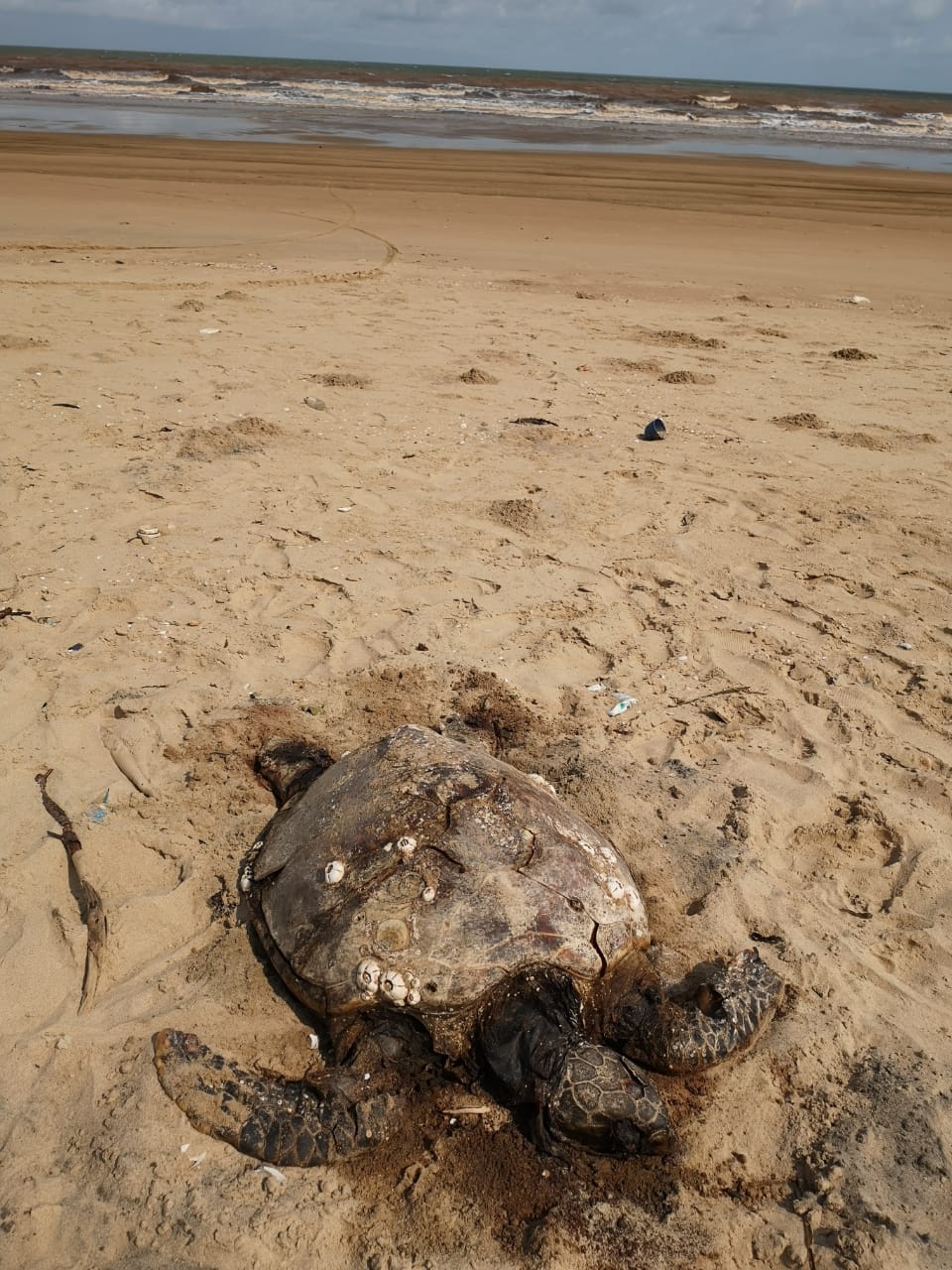
Photo by Abigail Kidd | © Ulinzi Africa Foundation
‘The longer we study these fascinating animals, the more we learn about them!’ remarks Dr Jeanne Mortimer, or Madame Torti as she is affectionately known in Seychelles. Dr Mortimer has worked to conserve Seychelles’ sea turtles since the 1980s and has been instrumental in establishing the long-term monitoring of their populations.
And it was Dr Mortimer who received a curious WhatsApp message on 18 August 2025: a dead turtle had washed up on the beach near Kipini, Kenya. The bad injuries visible in the photos suggested this turtle, a female, had been killed by fishing trawlers that had been operating in the area over a period of five days, during which three other turtles had similarly washed ashore, dead.
But Dr Mortimer, who is based in Seychelles, had received the message for a more extraordinary reason than merely to notify her of the loss: the flipper tags on this turtle were recognised as those applied in Seychelles by staff at the Save Our Seas Foundation D’Arros Research Centre (SOSF-DRC) during the 2024–25 turtle-nesting season.
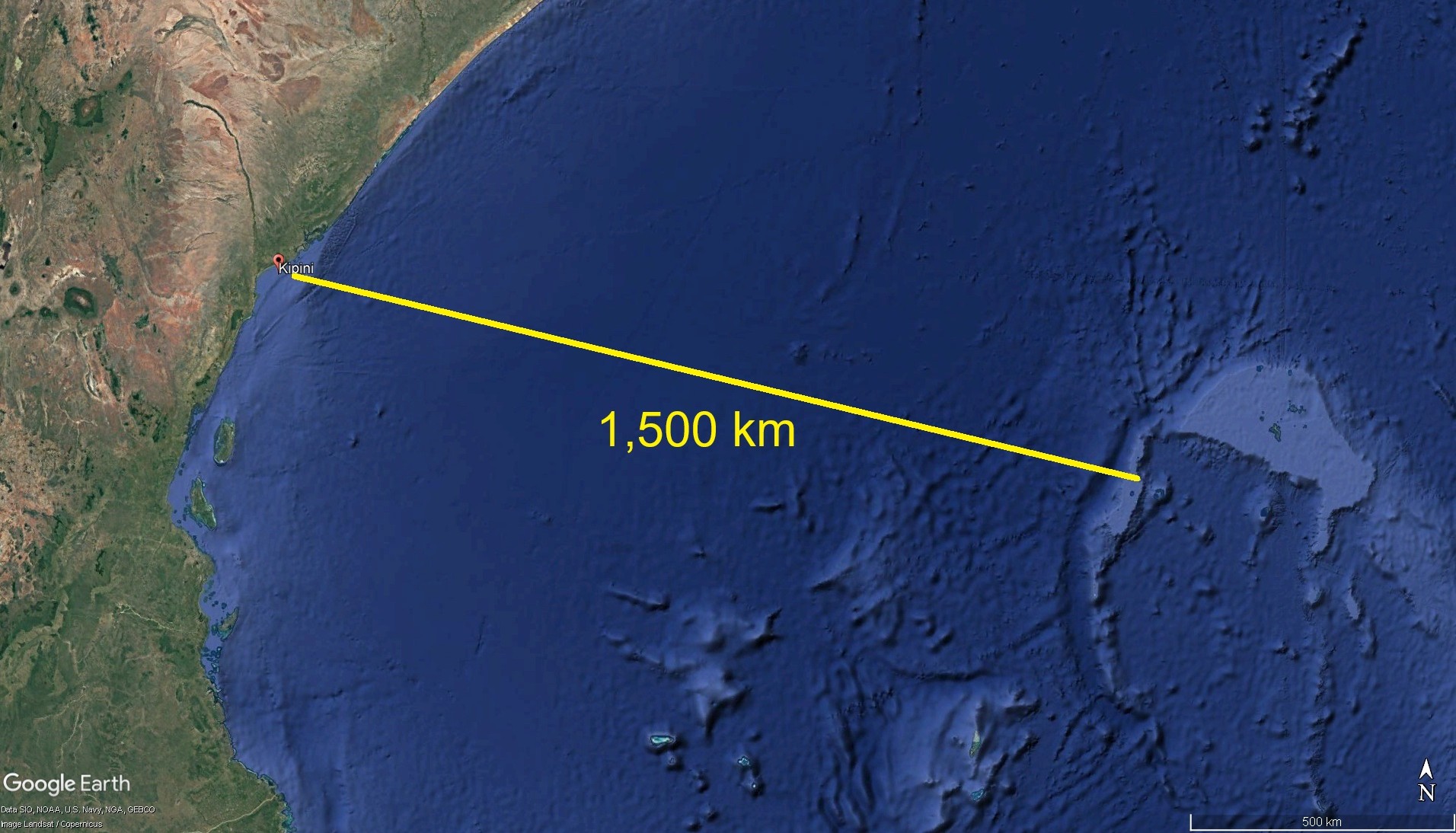
Image by Jeanne Mortimer
This was only the second record of an adult female hawksbill turtle journeying outside Seychelles’ waters, and further than the Mascarene Islands and Madagascar.
‘We know that at the end of the nesting season adult hawksbill females leave the vicinity of the beach and travel to distant feeding grounds, where they spend most of their adult lives,’ says Dr Mortimer. ‘But we didn’t always know where they went. If the adult feeding ground is in the same area that humans are fishing (especially using nets or trawls), turtles wearing flipper tags may get captured. And if the fishermen report the capture of a tagged turtle, this provides valuable information about the location of the feeding grounds of the adult turtles.’
‘But’, she continues, ‘there were no records of our flipper-tagged adult female hawksbills from Seychelles being intercepted by anyone after they left the nesting beach.’
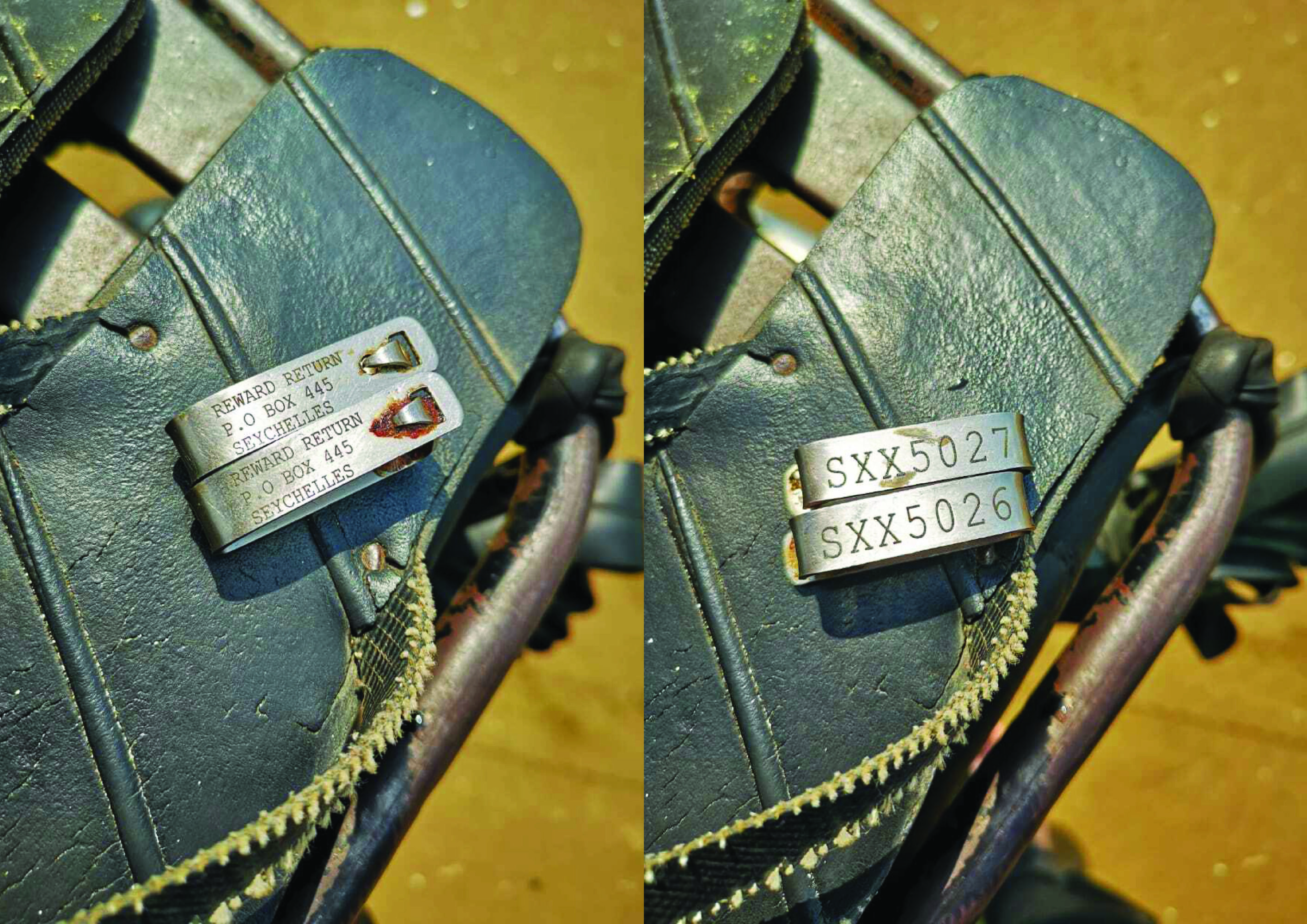
Photo by Abigail Kidd | © Ulinzi Africa Foundation
‘To better understand the migrations of Seychelles’ adult hawksbill turtles we needed more advanced technology than flipper tags and our community monitoring projects: we needed satellite-tracking,’ explains Dr Mortimer. ‘And when we tracked females by satellite, we found that their feeding grounds were usually located in deep water (in the vicinity of Seychelles), in the open sea, far away from where fishermen could catch them. This solved much of the mystery and explained why we were not getting tag returns.’
Satellites proved to be a useful addition to Seychelles’ turtle monitoring and provided some of the missing pieces of the puzzle. And although satellite-tracking showed that, after nesting, most female hawksbills remain in deep waters in the vicinity of Seychelles, it turns out that isn’t the whole story.
The issue with satellite-tracking is the cost: thousands of US dollars can be spent tracking a single female over the course of a year.
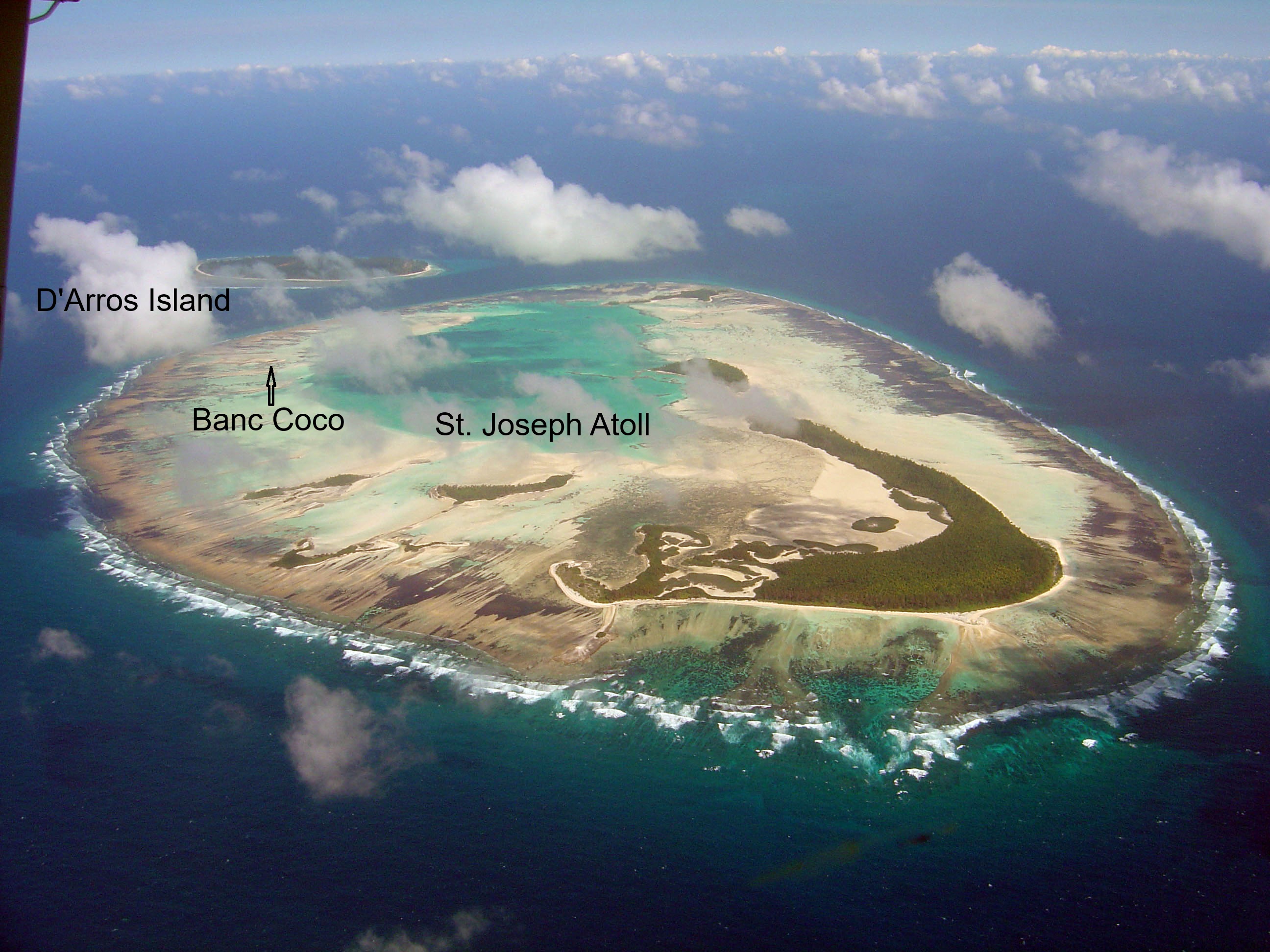
Flipper tags, by contrast, remain a cost-effective way to keep tabs on turtles for decades at a time. The turtle-monitoring programme at D’Arros Island and St Joseph Atoll in the Amirantes Islands of Seychelles began in 2004 and has been supported by the Save Our Seas Foundation since 2012.
‘Seychelles is an incredibly important place for nesting hawksbill turtles,’ says the SOSF Founder, His Excellency Abdulmohsen Abdulmalik Al-Sheikh. ‘The beaches of D’Arros Island and St Joseph Atoll are vital places for mother hawksbill turtles to lay their eggs, and this extraordinary finding reminds us how important long-term turtle-tagging programmes are.’
St Joseph Atoll. Image by Jeanne Mortimer | © Save Our Seas Foundation
This hawksbill turtle – tagged with flipper tags when she came ashore to nest at Banc Coco in St Joseph Atoll – has extended the known feeding range of adult hawksbills from Seychelles.
‘Since the year 1970, when our Seychelles hawksbill-tagging programme began, we have recorded only one other flipper-tagged Seychelles post-nesting adult female hawksbill along the East African coast – in Tanzania in 2010,’ says Dr Mortimer. ‘So this recent record is only the second of its kind in 55 years of flipper-tagging many hundreds of adult nesting hawksbills in Seychelles.’