Manta Ray Cognition

Nassau, Bahamas

Key Objective:

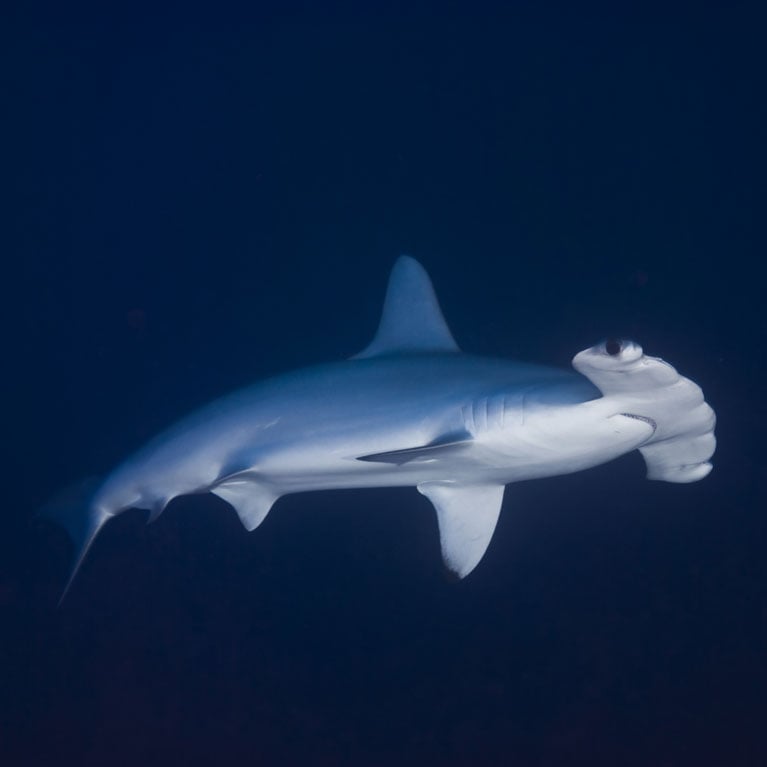
This project mainly focuses on finding out more about the visual abilities, social behaviour, learning and memory of giant manta rays (Manta birostris) with the largest brain of all fish.

Why this is important:

In spite of the fact that their populations are heavily fished in many countries and that they are exceptionally large-brained cartilaginous fishes, little is known about their abilities (unlike dolphins, for example).

Background


Basically nothing is known about the sensory, learning abilities or social life of giant manta rays. They are difficult to study in their natural habitat, because their presence is often unpredictable, an experiment conducted in the wild is often expensive, and it is hard to create a well-controlled environment. Manta rays have demonstrated curiosity and interest toward divers at many tourist locations, but we do not have information what might be the effect of the presence of human on their behavior. However, their populations are decreasing due to commercial or artisanal fisheries in many countries and the species is near threatened. My neuroanatomical research on Mobulid brains and the preliminary experiments on wild manta rays in the Maldives and Ecuador suggest strong evidence that these animals live a much more complex social life than we might think, and that they have cognitive abilities only known from other large-brained animals, such as elephants or dolphins. The curiosity and interest of these animals toward humans, as well as the results of the preliminary experiments have inspired me to conduct more detailed experiments in a well-controlled environment. I have been in contact with the Atlantis Aquarium, Bahamas for several years in order to continue my experiments on the giant manta rays, which I started at the Lisbon Aquarium. The results of that research were published as the first scientific paper on a behavioral experiment conducted on a giant manta ray (Manta birostris).

Aims and Objectives

The general aim of this research is to better understand how well manta rays are able to sense the environment around them, which sensory cues are more important for them then others, how well they are able to learn and remember, compared to other fishes with much smaller brain size. How complex their social life is, how do they communicate with each other or probably with other species.

I intend to increase awareness in the public of these magnificent animals throughout these popular topics. The results of this project will also support conservation activities in many countries and better handling of captive individuals.

Interacting with giant manta rays

.(JavaScript must be enabled to view this email address), 07 May, 2012

After spending countless hours observing and following around the manta rays at front of the window of the beautiful Atlantis aquarium you tend to think that you know more or less what is possible to know about these manta rays.…

Time flies with manta rays

.(JavaScript must be enabled to view this email address), 16 April, 2012

Time seems to fly way too fast when you spend it with manta rays: I successfully accomplished important observations and most of the experiments I have been planning to do for a long time during the second phase of the…

A new discovery about manta rays???

.(JavaScript must be enabled to view this email address), 01 April, 2012

Wonderful day today! My first day of the second research phase at the beautiful Atlantis Aquarium. And seems like a new discovery about manta rays! I had started the day early, before the spring break crowd woke up at this…

Manta rays with the largest brain of all fish

.(JavaScript must be enabled to view this email address), 17 February, 2012

During my studies on the brain of several shark and batoid species in the last 11 years I found that Mobulid rays have the largest brain of all fish studied so far, extending the upper boundary of the batoid minimum…

Spy camera stolen by fish

.(JavaScript must be enabled to view this email address), 26 January, 2012

The research does not always go as we plan, does it? My plan was to record the feeding session of the giant manta ray at the Atlantis Aquarium from underwater, but without influencing his regular feeding behavior, so no divers…